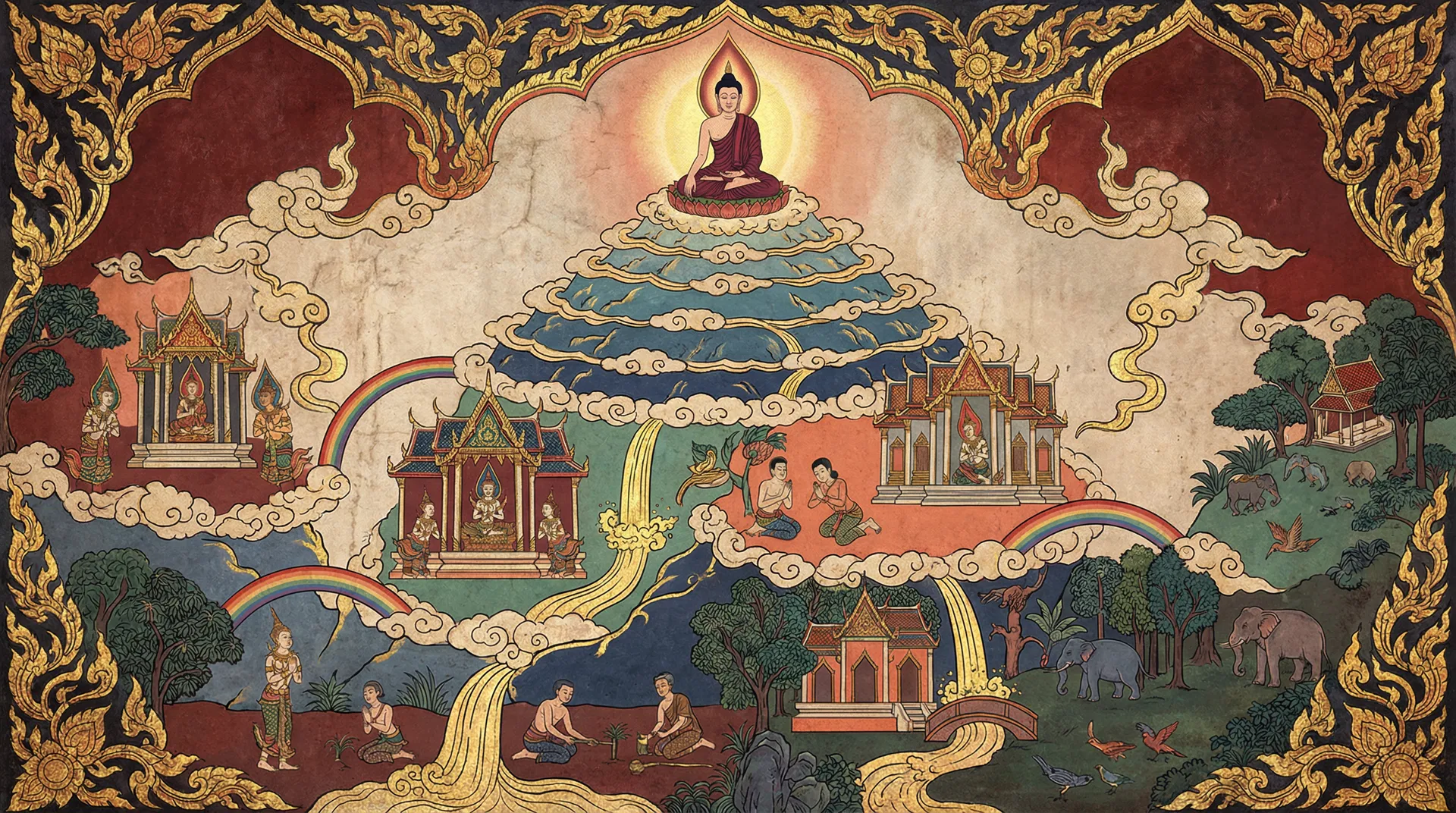
Mahā-Ummagga Jātaka
Mahā-Ummagga Jātaka
In the glorious city of Mithila, under the reign of King Brahmadatta, lived a prince of extraordinary intellect named Mahosadha. From his earliest days, Mahosadha displayed a mind that sparkled with ingenuity and foresight. While other children played with toys, Mahosadha would be found observing the intricacies of nature, solving riddles posed by scholars, and devising clever solutions to everyday problems.
His reputation for wisdom spread far and wide, reaching the ears of King Brahmadatta himself. The king, a wise ruler but often prone to impulsive decisions, found himself increasingly relying on Mahosadha's counsel. The prince, though young, possessed a remarkable ability to see through deception, anticipate consequences, and offer solutions that were not only practical but also ethically sound.
One day, a serious dispute arose between two merchants, each claiming ownership of a valuable jewel. The king, unable to ascertain the truth, summoned Mahosadha to arbitrate. Mahosadha, with a calm demeanor, asked for a pot of boiling water. He then instructed the merchants to place their hands into the boiling water. The one whose hand showed no sign of scalding would be deemed the true owner, for it was believed that a guilty conscience would lead to immediate harm. The deceitful merchant, fearing the pain and exposure, quickly withdrew his hand, confessing his lie. The jewel was rightfully returned to its owner, and the king marveled at Mahosadha's ingenious method of revealing the truth.
Another time, a great famine threatened Mithila. The granaries were empty, and the people were starving. King Brahmadatta, distraught, sought Mahosadha's advice. Mahosadha, instead of despairing, proposed a radical solution. He suggested that the king declare that anyone who brought grain to the city would be exempt from taxes for seven years. This seemingly simple decree had a profound effect. Merchants from far and wide, attracted by the tax exemption, brought vast quantities of grain to Mithila, filling the granaries and saving the kingdom from starvation.
Mahosadha's wisdom was not limited to domestic affairs. When a formidable enemy king, named Kalābudha, threatened Mithila with invasion, King Brahmadatta was filled with dread. Kalābudha was known for his ruthlessness and his vast army. Mahosadha, however, saw an opportunity in this crisis.
He devised an elaborate plan to create an illusion of overwhelming strength. He instructed the people to dig numerous trenches around the city and to fill them with water. He then ordered the construction of countless wooden chariots, each with a single wheel. These chariots were positioned in the trenches, creating the appearance of a massive, well-fortified army preparing for battle. Furthermore, he had the city gates adorned with numerous flags and banners, giving the impression of a bustling and populous city.
When King Kalābudha arrived with his army, he was met with a sight that filled him with awe and terror. The sheer number of 'chariots' and the apparent preparedness of Mithila's 'defenses' made him believe that any attack would be suicidal. He saw the vast number of flags and assumed a population far greater than his own forces. Overwhelmed by this illusion of strength, Kalābudha decided to retreat, convinced that Mithila was too formidable to conquer.
King Brahmadatta, witnessing these incredible feats, realized the immense value of Mahosadha's wisdom. He declared Mahosadha the chief advisor of the kingdom, entrusting him with the responsibility of ensuring the welfare and security of Mithila. Mahosadha, in turn, governed with fairness, integrity, and an unwavering commitment to justice. He established schools, built hospitals, and ensured that every citizen had access to basic necessities. His reign as advisor was a golden age for Mithila, a period of unprecedented peace, prosperity, and intellectual growth.
The story of Mahosadha's wisdom became a legend, passed down through generations, reminding people that true strength lies not in brute force, but in intelligence, foresight, and a deep understanding of human nature. His life was a testament to the power of a brilliant mind dedicated to the well-being of all.
— In-Article Ad —
💡Moral of the Story
Intelligence, foresight, and strategic thinking are powerful tools that can overcome seemingly insurmountable challenges and bring about peace and prosperity.
Perfection: Wisdom (Paññā)
— Ad Space (728x90) —
More Jataka Tales You May Enjoy
 157Dukanipāta
Sasa Jataka
Sasa JatakaLong, long ago, in a time when the stars seemed closer and the moon cast a gentler glow, ...
💡 True virtue lies not in what one possesses, but in the willingness to give selflessly for the benefit of others.
 422Aṭṭhakanipāta
Sammodamāna Jātaka
Sammodamāna JātakaIn the ancient city of Varanasi, nestled beside the sacred Ganges River, lived a w...
💡 Unity, open communication, and mutual respect are the cornerstones of lasting success and true prosperity. Harmony achieved through collaboration is far more powerful than individual cunning or division.
 283Tikanipāta
Sādhina Jātaka
Sādhina JātakaIn the sun-drenched kingdom of Kalinga, ruled a king named Sādhina, whose reign was ma...
💡 True wealth is not measured by material possessions, but by the well-being of one's people and the purity of one's heart. Greed leads to suffering and the decline of prosperity.
284TikanipātaMahāpaduma Jātaka
Mahāpaduma JātakaIn the heart of a lush forest, far from the clamor of human settlements, lived a Bo...
💡 True beauty and value lie within the heart, not in external possessions or trophies. Greed and cruelty ultimately lead to sorrow and regret.
285TikanipātaMūga-pakkhaya Jātaka
Mūga-pakkhaya JātakaIn a serene hermitage nestled amidst the verdant hills, lived a Bodhisattva know...
💡 True wisdom is often found in silence and deep contemplation, rather than in endless debate or attachment to one's own opinions. Be open to questioning your own understanding.
287TikanipātaThe King of the Elephants (Makhādeva Jātaka)
The King of the Elephants (Makhādeva Jātaka) Long ago, in a lush forest teeming with life, a majesti...
💡 True leadership requires immense courage, self-sacrifice, and unwavering determination to protect and provide for one's followers, even in the face of insurmountable challenges.
— Multiplex Ad —